Program Management Life Cycle: Three Phases and Six Gates
The program management life cycle has three phases in the Project Management Institute (PMI) Standard: definition, delivery and closure, each ending in a governance decision that approves, redirects or stops the program.

By Sanjeev Kumar, Founder · Updated 9 Oct 2026

Key takeaways
- The program management life cycle has three phases: definition, delivery and closure. Initiation, planning, execution, monitoring and closing are project process groups, which run inside each component.
- Definition has two sub-phases, formulation and planning. A program can be stopped in formulation if the business case is weak, which is the cheapest place to stop it.
- A program can close while some of its benefits are still arriving, so each benefit needs a named owner in the organisation that will sustain it.
- Six gates (authorisation, plan approval, component authorisation, phase review, transition and closure acceptance) each need a named decider and a pass or fail test.
In this article
- 1What is the program management life cycle, and how many phases does it have?
- 2How does the program life cycle differ from the project life cycle?
- 3What happens in the definition phase, and why can a program end there?
- 4What happens in the delivery phase, and how do you run it iteratively?
- 5When does a program close, and who approves it?
- 6Which questions should each program gate answer?
- 7How do we help you learn and apply the program life cycle?
- 8Frequently asked questions
A program is not a large project, and its life cycle is not the project life cycle with a bigger budget. A project is planned once and delivered. A program starts before funding exists, adds and retires components as it learns, and is judged on benefits, not deliverables.
The difference shows in the paperwork. PMI's The Standard for Program Management, Fifth Edition (2024), lists 13 subsidiary plans in section 3.8.1.2 that make up the program management plan, from benefits to scope. The life cycle is the sequence of decisions that governs them, and a five-step project cycle cannot do that job.
This page sets out the phases, the decision that ends each one and the ways programs go wrong between them. It then gives you a six-question gate sheet for your next program governance review. "Program" here means a group of related projects managed together, not software code.
What is the program management life cycle, and how many phases does it have?
The program management life cycle has three phases: program definition, program delivery and program closure. This is the structure in section 3.8 of PMI's Standard for Program Management, Fifth Edition. A program is a set of related projects, subsidiary programs and program activities managed together to obtain benefits that managing them separately would not give. Each project or subsidiary program inside it is a component. The program steering committee is the governance group that approves plans, components and closure.
| Phase | Purpose | Sub-phases | Ends when |
|---|---|---|---|
| Definition | Authorise the program and produce its management plan | Formulation, planning | The program management plan is reviewed and formally approved (by the program steering committee, per the governance plan) |
| Delivery | Produce each component's results and deliver benefits | Component authorisation and planning; oversight and integration; transition and closure | Governance decides delivery criteria are met, or ends the program |
| Closure | Hand benefits to the organisation that will sustain them and close formally | Not subdivided | The steering committee accepts closure |
The sponsor approves the charter, which starts planning. Lists that show initiation, planning, execution, monitoring and closing describe project process groups, which run inside each component. Section 3.8 of the Standard names three program phases.
How does the program life cycle differ from the project life cycle?
The program life cycle is governed by benefits and strategic fit; the project life cycle is governed by delivering one scope. The Standard says programs "typically begin before funding is approved or when the program manager is assigned", whereas a project starts when its charter is approved. Four differences matter in practice:
- Where it starts. A program's earliest work often sits with the portfolio management body, the group that decides which initiatives the organisation funds.
- How delivery runs. The Standard calls program delivery "iterative instead of linear", because components are authorised, integrated and closed at different times.
- What counts as done. A project can be done when its deliverables are accepted. A program is done when its benefits are delivered or it is deliberately terminated.
- Where risk goes. Project risks are escalated to the program when they cut across components. Our recommended test: escalate a project risk when it affects more than one component or a program benefit. The program risk escalation criteria go further into how to apply it.
The roles differ in the same way: a project manager answers for a component's delivery, and a program manager answers for the benefits the components add up to. If you are unsure which of the two roles you hold, our guide to program manager vs project manager sets out how to tell. The first place a program can be cancelled is the definition phase.
What happens in the definition phase, and why can a program end there?
The definition phase authorises the program and produces an approved program management plan. It has two overlapping sub-phases, formulation and planning. A program can be cancelled in formulation, because the Standard says formulation may conclude that the program "does not have a strong business case".
Formulation builds the business case. The sponsoring organisation assigns a sponsor, who secures funding and selects the program manager. The sponsor, the sponsoring organisation and the program manager together:
- Study scope, resources and cost.
- Run an initial risk assessment.
- Draft the program charter.
The charter is the document that decides whether the program is authorised. If it is refused, the Standard says to record the decision and archive the papers in a lessons learned repository.
Planning begins once the sponsor approves the charter. The team sets up governance and writes the program management plan, whose subsidiary plans cover benefits, stakeholders, governance, change, communications, finance, information, procurement, quality, resources, risk, schedule and scope. That is 13 plans, counted from the Standard's list in section 3.8.1.2. The Standard allows them to be combined into one plan or kept as several.
Our recommendation is to treat formulation as a study with a real chance of a "no". Stopping a program on paper costs far less than stopping it in delivery.
What happens in the delivery phase, and how do you run it iteratively?
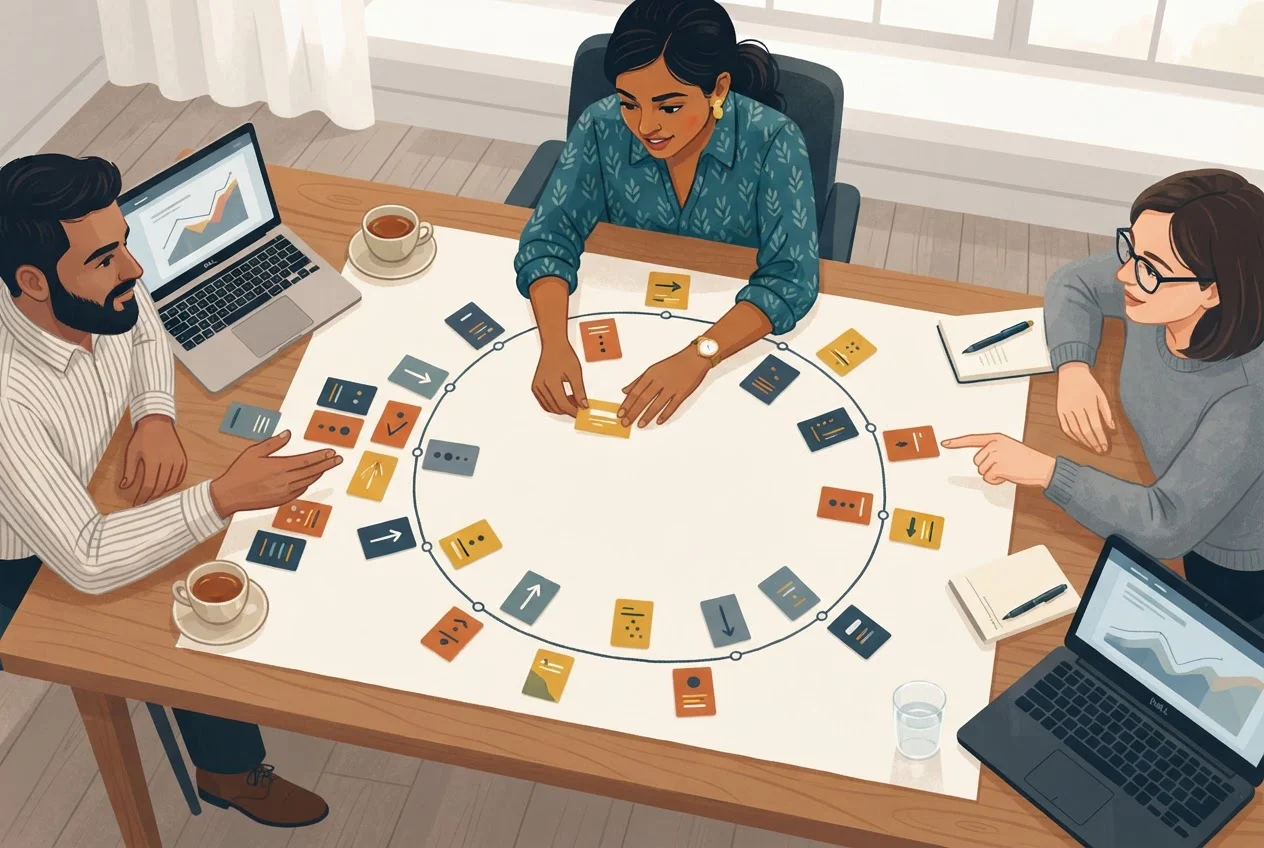
The delivery phase produces each component's results and integrates them so benefits are delivered. Every component moves through three sub-phases: authorisation and planning, oversight and integration, and transition and closure. Because components start and finish at different times, delivery is a loop of decisions, not a single run from start to finish.
Two points from the Standard are easy to miss:
- Integration creates benefits. Some components produce benefits alone, but others only do so when combined. Without coordination, components may deliver outputs and no benefit. The program manager may start a new component just to join others together.
- Change has a ceiling. The steering committee approves changes only within the bounds of the program business case and organisational strategy.
Here is an illustrative example. A bank runs a digital onboarding program with three components: a mobile app built in short iterations, a core-system migration planned in fixed stages, and a branch-staff training project. The phases are the same for all three, and the app team's sprints do not change that. The Standard notes that iterative and incremental programs "might have fewer formal activities and less formal outputs", so the formality changes while the gates stay.
Delivery ends when governance decides its criteria are met, or ends the program. Closure then decides what happens to the benefits.
When does a program close, and who approves it?
A program closes when the steering committee accepts that the desired benefits are realised and transitioned, or decides to terminate it. The portfolio management body then gives the program manager approval to formally close. Early termination is legitimate: the Standard names a change of organisational strategy, or planned benefits that are no longer achievable, as reasons.

Section 4.4.1 sets out the conditions before closure:
- Every component is completed or terminated.
- Assigned resources are released.
- All contracts are formally closed.
- The steering committee or designated group gives formal closure acceptance.
The final report may include 12 items, counted from the list in that section: formal closure acceptance, benefits transition plan, financial and performance assessments, lessons learned, successes and failures, areas for improvement, risk management outcomes, risks that were unforeseen, customer approval, reasons for closeout, baseline histories and an archive plan.
A risk to avoid is closing the program the day the last project ends. The Standard states that "there are benefits that will be achieved after the program closure". Closure only works if someone in the sustaining organisation owns each benefit, so record that owner, the measure and the date in a benefits register before the final gate. Our guide to benefits realisation management shows a register with an owner and a worked rupee example.
Which questions should each program gate answer?
The six gate questions are: Is the program worth chartering? Can delivery start? Does this component support program outcomes? Should the program continue, change or end? Are benefits delivered and handed over? Can the program close? The Standard describes phase gate reviews, which end a phase and decide whether to continue, continue with modification, or end. The six-gate grouping is our own reading of sections 3.6.1.8, 3.8 and 4.4.
This sheet is our working tool. Thresholds such as "on track" belong in your governance plan, so set them before the first gate.
| Gate | Question | Pass when | Fail when | Decided by |
|---|---|---|---|---|
| 1. Authorisation (end of formulation) | Is the program worth chartering? | The business case ties expected benefits to a named strategic objective, a sponsor is assigned, the program manager is named, an initial risk assessment exists, and the charter is reviewed by the portfolio management body or governing body | A benefit cannot be traced to a strategic objective, or no sponsor will fund it | Sponsor, with portfolio body |
| 2. Plan approval (end of planning) | Can delivery start? | Governance is set up and the program management plan, including the benefits management plan and governance plan, is approved | Decision rights are unnamed, or the benefits plan is missing | Program steering committee |
| 3. Component authorisation (each component) | Does this component support program outcomes? | It has its own business case, meets the criteria in the governance plan and traces to a program benefit | No link to a program benefit | Governance, per the governance plan |
| 4. Periodic phase or segment review within delivery | Should the program continue, change or end? | The performance report shows benefits on plan and changes sit inside the business case | Benefits are no longer achievable, or strategy has moved | Governance participants |
| 5. Transition (end of delivery) | Are benefits delivered and handed over? | Every component is reviewed, remaining work is transitioned, and the final status is reviewed with the sponsor and committee | A benefit has no receiving owner | Sponsor and steering committee |
| 6. Closure acceptance | Can the program close? | Components are completed or terminated, resources released, contracts closed, and the final report is filed | Open contracts or unassigned benefits remain | Steering committee, then portfolio body |
Run the sheet before each governance review and mark every row pass or fail. Our recommendation is to check Gates 3 and 5 first, because component starts and handovers are easy to wave through. This is our judgement, not a measured rate.
How do we help you learn and apply the program life cycle?
We teach program management as a sequence of decisions you can defend, then show how to evidence them. We are Augment Consultancy, a specialist in Program and Portfolio Management, and we have mentored more than 6,000 professionals.
- Starting out. Program Leadership Blueprint is our starter offering, and Program Management Essentials is our foundation course for professionals new to programs. Essentials is not exam preparation.
- Preparing for PMI's Program Management Professional (PgMP®) certification. PMI awards the certification, not us. We offer a PgMP Self-Paced Mentorship Program, a PgMP® Fast Track Program (focused group mentoring) and PgMP® Application Writing Support, which stays with you until your application is approved. Our guide to how PgMP certification works walks through the process, and our PgMP certification training page explains the route.
- Before you commit. We offer a free discovery or eligibility consultation to discuss your goals and which program suits you.
As of October 2026, per enrolment and in US dollars: Program Leadership Blueprint costs US$10, Program Management Essentials US$99, PgMP Application Writing Support US$199, the PgMP Self-Paced Mentorship Program US$549 and the PgMP Fast Track Program US$1,000. Groups of three or more can receive discounts of up to 20%. Pricing varies by program and market.
To see the options, visit our course store.