Live PgMP Training for Discussion-Based Learners
Live PgMP training for discussion-led learners: five-domain cases, mentoring, application review, and transparent certification costs.
Live PgMP Training for Discussion-Based Learners
For senior program leaders, PgMP certification tests more than recall. The PMI assessment has 170 questions to complete in 240 minutes, after candidates have also documented and defended their qualifying experience.
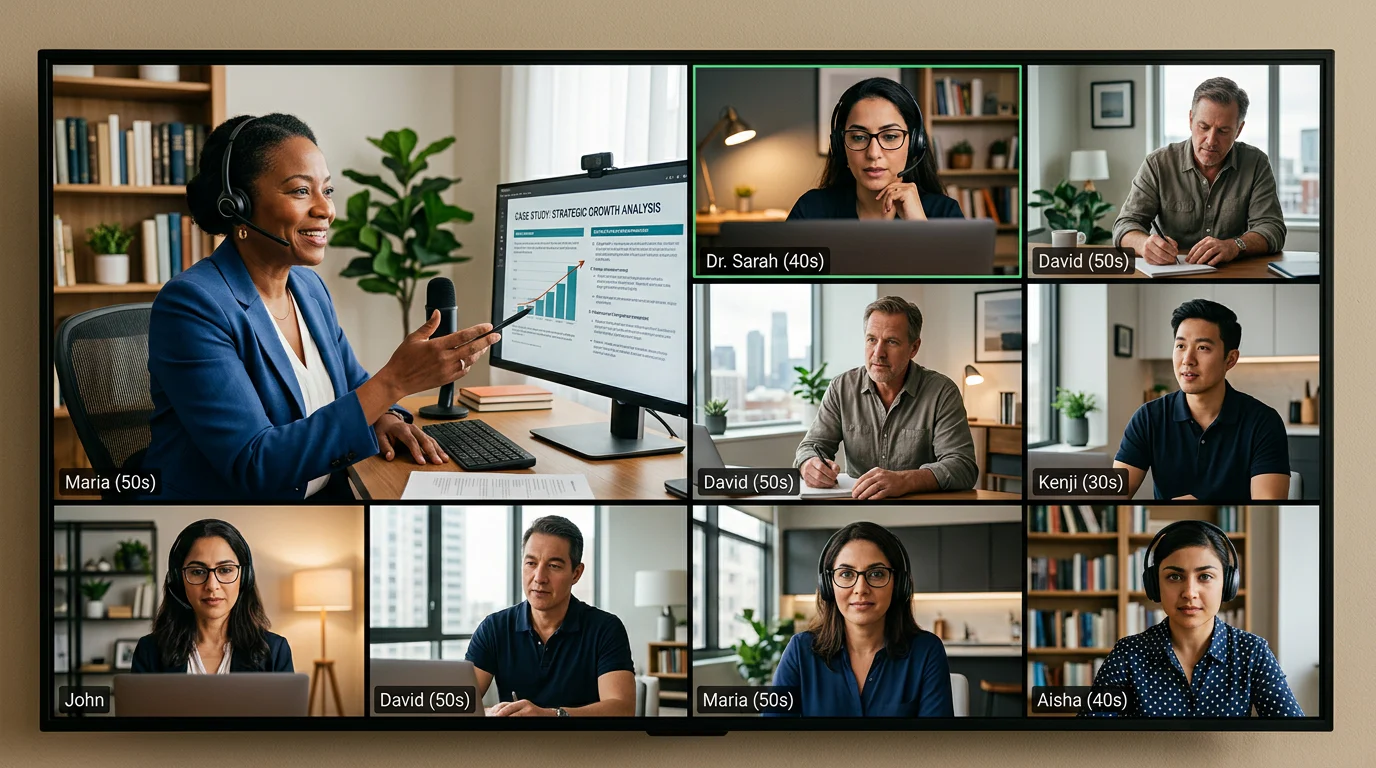
Discussion-based PgMP training gives experienced program leaders a place to reason through ambiguous cases aloud, challenge alternatives, and receive mentor feedback. Our live online route combines five-domain instruction, cohort discussion, application-review guidance, mentored study, and timed practice, while showing which certification costs are separate from course tuition.
We explain who benefits from this format, what happens in live sessions, how application support works, and how to evaluate the full cost before you commit. We also show what evidence a serious buyer should request from any provider and how the PgMP certification process fits around study.
Is Discussion-Based PgMP Training Right for You?
This format suits candidates who remember a concept once they have explained their reasoning, heard a credible alternative, and revised their position. It is especially useful when the difficult part is deciding between two plausible program-level actions, rather than locating another definition in a study guide.
We combine 24+ hours of self-paced video learning with six live sessions, mentor interaction, application guidance, recordings, and practice resources. That blend gives busy leaders flexibility without treating a recording library as a substitute for discussion.
| Decision Factor | Discussion-Led Live Study | Recorded Self-Study |
|---|---|---|
| Interaction | Real-time cases, peer challenge, and mentor Q&A | Usually self-directed or delayed |
| Schedule | Fixed cohort sessions | Study at any time |
| Feedback | Discuss reasoning and clarify gaps live | Often limited or separate |
| Accountability | Cohort milestones and mentor touchpoints | Candidate-managed |
| Access | Publish recording and resource expiry clearly | Confirm the exact access term |
| Best Fit | Learners who need dialogue to sharpen judgment | Learners with strong discipline and irregular schedules |
Switching halfway through another certification course does not require starting again. Keep your notes, mock results, and application drafts, then identify whether the open gap is PgMP judgment, panel-ready evidence, or study structure. Our PMP-to-PgMP transition guide helps candidates separate useful project-management knowledge from the program-level thinking they still need.
What Happens in a Live Online PgMP Session?
A live session should be more than slides with an open microphone. We use live time for the decisions that benefit from challenge, explanation, and a mentor’s interpretation of the trade-offs, while recordings handle review at a candidate’s own pace.

What Happens Before the Discussion?
Candidates review the relevant concept, a short case, and the decision they will need to make. This preparation keeps live time focused on reasoning, not passive note taking, and helps everyone arrive ready to compare approaches.
What Happens During the Discussion?
We ask candidates to recommend an action, explain why it protects program value, and respond to objections from peers. The mentor then connects the discussion to the relevant domain, clarifies where project-level thinking falls short, and identifies the evidence behind a stronger answer.
What Happens After the Discussion?
Each session should produce a practical study decision, such as revisiting a domain, improving an application example, or changing mock-exam pacing. Candidates balancing demanding roles can use our working program managers resource to turn those decisions into a realistic preparation schedule.
How Does Discussion Cover the Five PgMP Domains?
Our syllabus follows the official blueprint rather than treating every topic as equally important. PMI assigns 44% of the exam to Program Life Cycle Management, with the remaining weight split across Strategic Program Management, Benefits Management, Stakeholder Management, and Governance in the PgMP handbook.
| Discussion Module | Exam Weight | Live Case Focus |
|---|---|---|
| Strategic Program Management | 15% | Strategic objectives, priorities, and business cases |
| Program Life Cycle Management | 44% | Dependencies, sequencing, integration, control, and closure |
| Benefits Management | 11% | Measures, ownership, realization, and trade-offs |
| Stakeholder Management | 16% | Sponsor conflict, influence, communication, and expectations |
| Governance | 14% | Decision rights, escalation, oversight, and approvals |
A useful discussion case is deliberately ambiguous. For example, a regional transformation program may have delayed component projects, a new regulatory requirement, an at-risk benefit forecast, and a sponsor insisting on the original launch date. The candidate must recommend an action, not merely identify a term.
We assess the answer against five questions: Does it protect the strategic objective and benefits? Does it address dependencies? Does it use the correct governance path? Does it account for stakeholders? Does it explain the trade-off? Our training methodology shows how we turn those questions into repeatable study practice.
What Does Personalized Mentoring and Application Review Include?
Personalized support should make the certification path clearer, not make promises it cannot keep. We teach from the experience of certified PgMP® and PfMP® professionals with real-world program and portfolio management backgrounds, then help candidates decide where their next hour of effort belongs.
Who Gives Feedback and How?
Before enrolling, candidates should know who will lead sessions, who will review work, whether feedback is private or cohort-based, and how long support lasts. We use mentor-led discussion, a gap assessment, and community access to make those boundaries visible.
What Does Application Review Cover?
Our review support can help candidates inventory genuine experience, improve program-level framing, and make their own summaries clearer. PMI expects specific examples, first-person responsibility, and answers that typically run 350 or more words within a 700-word maximum for each experience summary, according to its application guidance.
The candidate remains responsible for every fact, document, and final submission. Our application review support helps clarify real evidence, but it cannot create qualifying experience or replace the candidate’s judgment.
What Should Mentor Feedback Produce?
Strong feedback produces a priority order. It should show whether the next task is revising a weak experience summary, practising a domain, resolving a recurring scenario error, or planning a timed mock exam.
What Does PgMP Training Total Cost?
The honest answer separates PMI costs from tuition and optional support. The current US PMI store lists annual membership at $164, while the PgMP exam costs $800 for members and $1,000 for nonmembers through the PMI store.
| Cost Item | Current Amount | When It Applies |
|---|---|---|
| PMI Membership | $164 per year | Optional member route |
| PgMP Exam, Member | $800 | First exam attempt |
| PgMP Exam, Nonmember | $1,000 | First exam attempt |
| Member Baseline | $964 | Membership plus first exam |
| Nonmember Baseline | $1,000 | First exam without membership |
| Standalone Application Review | $199 | Only when purchased separately |
| Member Re-Exam | $600 | If another attempt is needed |
| Nonmember Re-Exam | $800 | If another attempt is needed |
Your complete total is current course tuition plus the applicable PMI route, then only the separate services you choose. Course materials and practice resources should be identified as included or separate before payment, and no buyer should be charged twice for bundled application support. Use our PgMP exam cost calculator to test the member, nonmember, and retake scenarios against your own plan.
Why Choose Augment Consultancy for Discussion-Based PgMP Training?
At Augment Consultancy, we built this route for program leaders who do not want another library of recordings. We combine structured self-study with six live sessions, mentor-led discussion, application guidance, and practice analysis, so each activity addresses a genuine decision in your certification path. Our mentors help you distinguish a knowledge gap from an evidence gap, then turn that diagnosis into next steps. You will keep ownership of your experience and application while receiving candid questions, clearer framing, and feedback on where more detail is needed. We publish what buyers should ask about live access, revision scope, support expiry, and costs outside tuition, because a confident purchase starts with a visible service boundary. If you are moving from a generic course, bring your notes, drafts, and mock results. We will help you decide what to keep, what to strengthen, and whether live discussion is the right next investment: Augment Consultancy Home
FAQs on Discussion-based PgMP Training
Does Discussion-Based PgMP Training Work for Learners Who Prefer Conversation?
Yes. We use live scenarios, peer challenge, and mentor feedback for candidates who learn by explaining decisions. Recordings support flexible review between sessions when needed.
Can I Switch from Another PMI Certification Course Midway?
Keep your notes, mock results, and your own application drafts. We can identify whether your remaining gap is domain reasoning, evidence framing, or exam pacing.
Will a Mentor Write or Submit My PgMP Application?
No. We can clarify, question, and improve the presentation of your evidence, but you remain accountable for each claim, supporting document, and final submission to PMI.
What Is the Minimum First-Attempt PgMP Cost Before Tuition?
For a first attempt, compare current course tuition with either the member route of $964 or the nonmember exam route of $1,000, before optional extras.
What Should I Verify Before Choosing a Provider?
Ask for instructor names, cohort dates, review rounds, response times, access expiry, simulator diagnostics, and pass-rate methodology before relying on a provider's claims alone.